Avarice
Avarice, the disordered love of material goods, is one of the seven deadly sins that Dante Alighieri systematically condemns and purges throughout the Divine Comedy. In the Inferno, the avaricious and the prodigal are punished in the Fourth Circle, locked in an eternal, futile struggle. In Purgatory, the sin is purged on the Fifth Terrace, where penitent souls lie prostrate, weeping and reciting examples of holy poverty and generosity. The sin is presented not merely as a personal failing but as a systemic poison that distorts political authority, ecclesiastical integrity, and the very fabric of society, with the voice of Hugh Capet delivering a sweeping historical indictment of its corrupting influence on the Church and the French monarchy.
The Punishment of Avarice in the Inferno
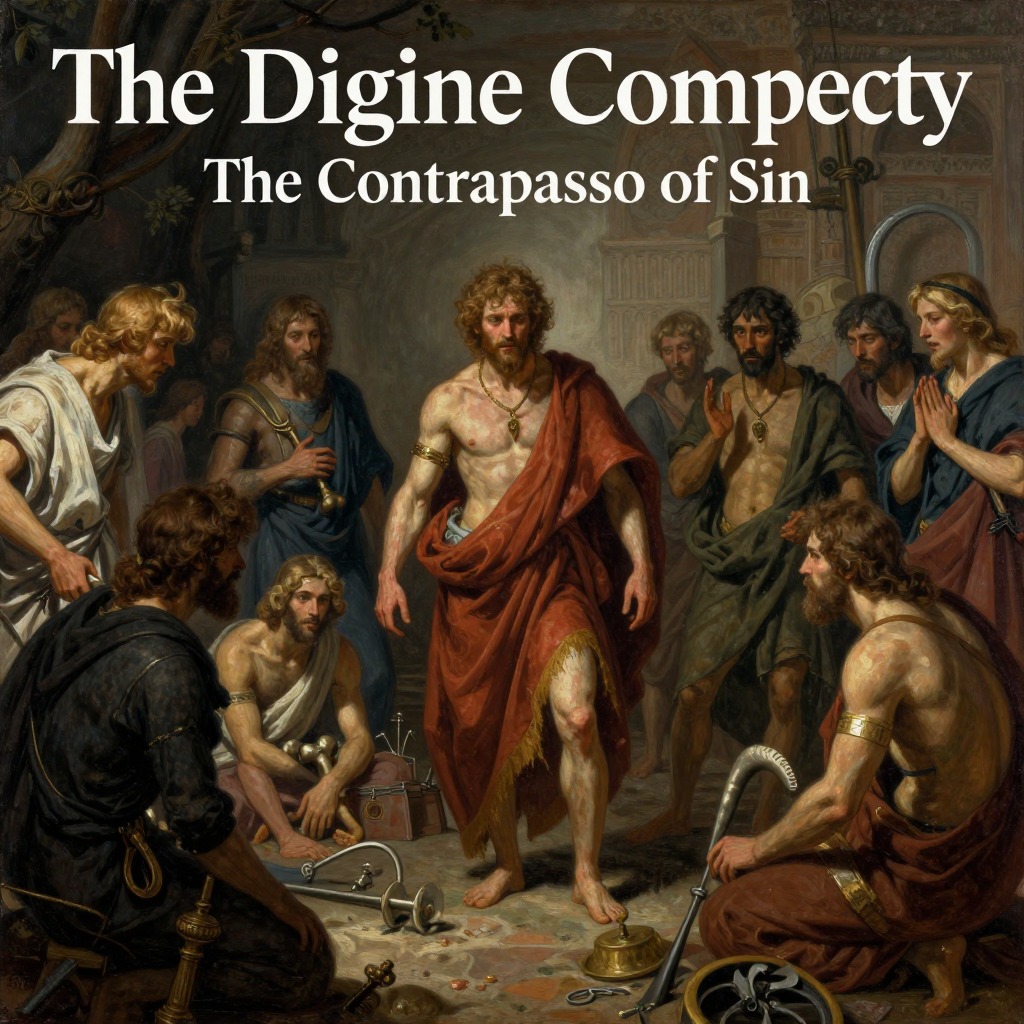
In the Fourth Circle of Hell, Dante and Virgil encounter the avaricious and the prodigal, who are punished together in a single, grotesque roundelay. The sinners are divided into two opposing groups, each rolling enormous weights forward with their chests. When they meet, they clash together and then turn back, crying out, "Why keepest?" and "Why squanderest thou?" This perpetual, futile labor is their eternal torment. Virgil explains that these were people who were "asquint in intellect" in their first life, making no measured use of their wealth. Among them are many clerics, including popes and cardinals, "in whom doth Avarice practise its excess." The punishment is a direct application of the law of contrapasso: those who hoarded or squandered material goods in life are now condemned to an eternity of pushing dead weight, their souls rendered so sordid by their sin that they are now "unto all discernment dim." Virgil further explains that at the Last Judgment, the avaricious will rise with their fists clenched, while the prodigal will rise with their hair shorn, a permanent mark of their respective failings.
The Purification of Avarice on the Fifth Terrace of Purgatory
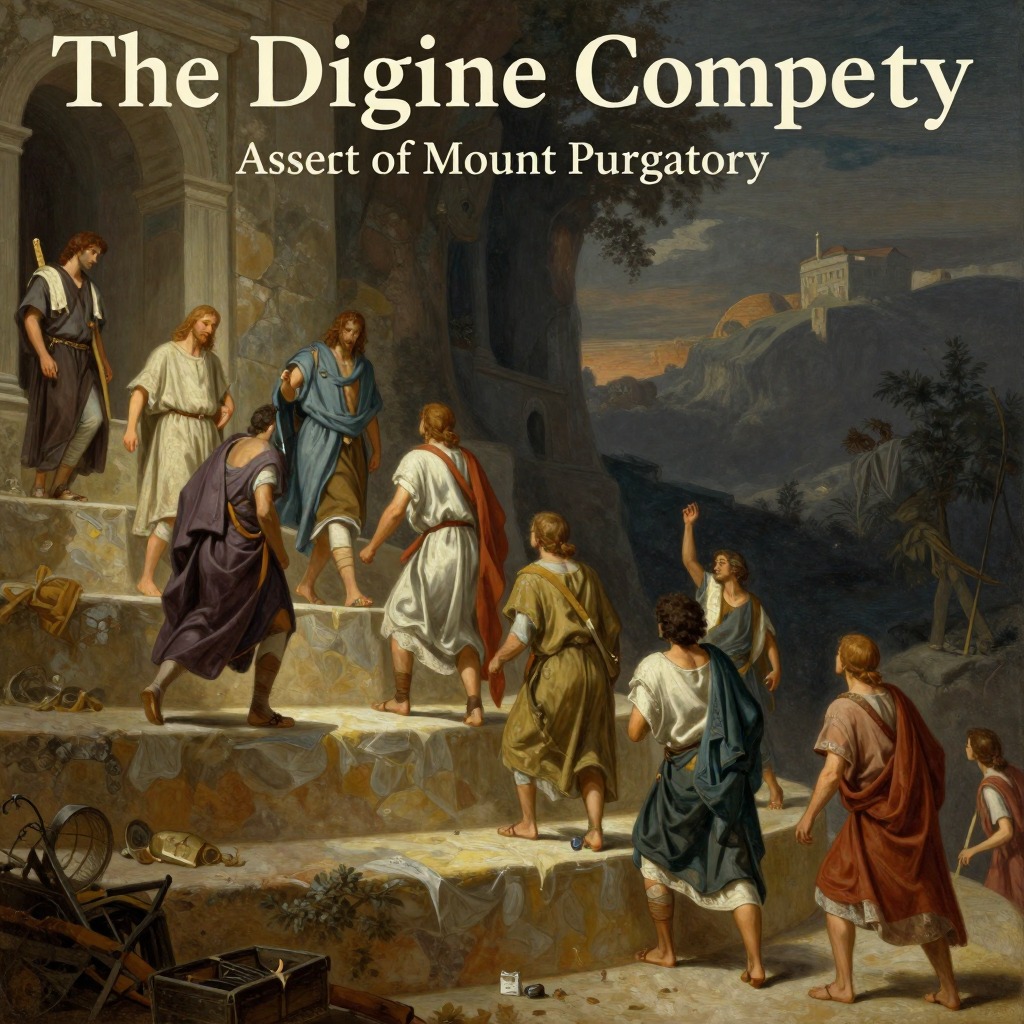
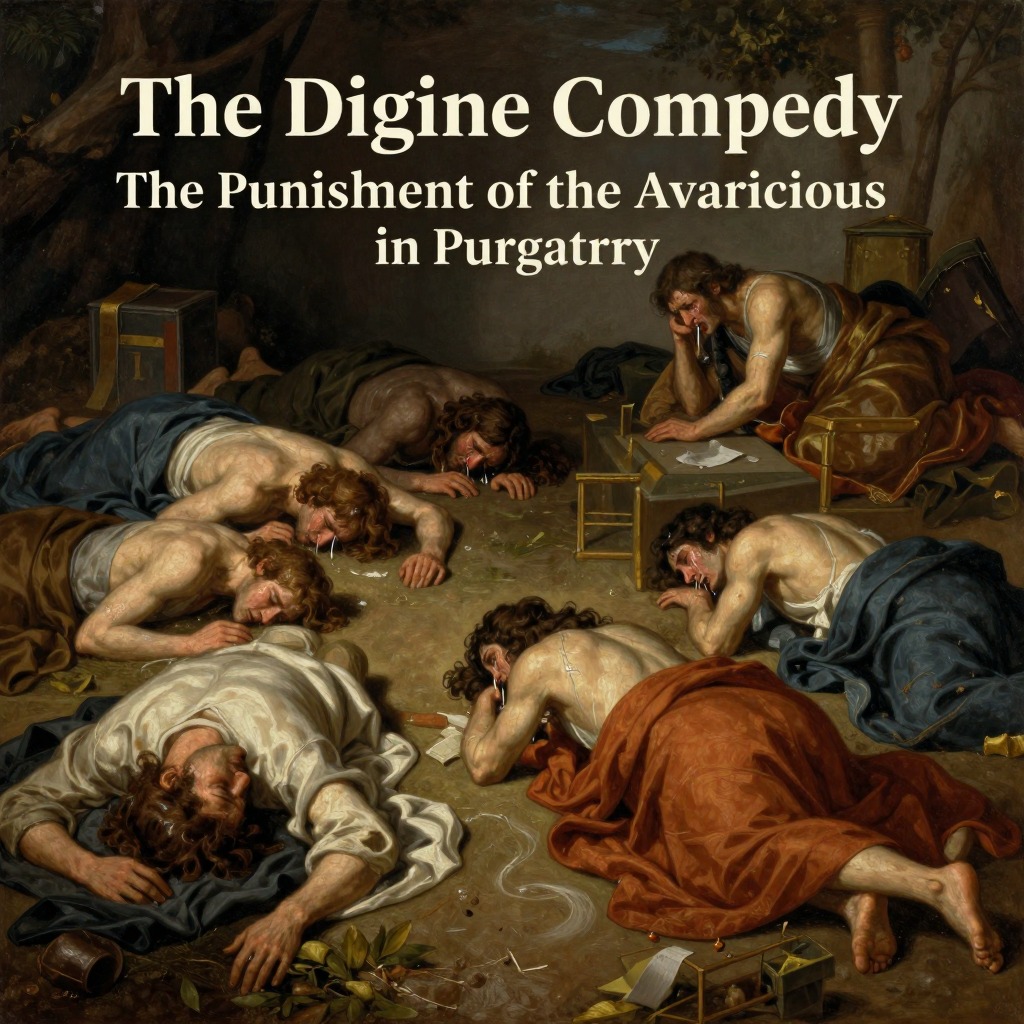
On the Fifth Terrace of Mount Purgatory, the sin of avarice is purged. The penitent souls lie prostrate on the ground, their faces turned downward, weeping. They recite the verse "Adhaesit pavimento anima mea" ("My soul cleaveth unto the pavement"), a psalm that expresses their former attachment to earthly things. Their posture is a direct contrapasso: because in life their eyes were "fastened upon earthly things" and never lifted to heaven, justice now "has merged it in the earth." They are bound and imprisoned by the feet and hands, and they must remain immovable and prostrate as long as it pleases the just Lord. One of the penitents, Pope Adrian V, explains that he was once wholly avaricious, but upon becoming pope, he discovered life to be a lie and the heart could not rest in worldly ambition. He describes the punishment as the most bitter on the mountain, a direct consequence of a soul that failed to uplift itself.
The Historical and Political Indictment of Avarice: Hugh Capet
Among the penitent on the Fifth Terrace, the soul of Hugh Capet delivers a powerful and extended condemnation of avarice, tracing its corrupting influence through the history of the French monarchy. He begins by cursing the "old she-wolf" of avarice, which "more than all the other beasts hast prey, because of hunger infinitely hollow." He identifies himself as the root of the "malignant plant" that overshadows the Christian world, the Capetian dynasty. He recounts how his descendants, the Louises and Philips, used falsehood and force to acquire Ponthieu, Normandy, and Gascony. He prophesies the coming of another Charles from France, who will use the lance of Judas to burst the paunch of Florence, gaining not land but sin and infamy. He foresees the abduction of Pope Boniface VIII at Alagna, the renewal of the vinegar and gall for Christ in his own Vicar, and the relentless greed of the "modern Pilate." The speech culminates in a cry for divine vengeance, asking when he will be joyful made by looking on the concealed vengeance of God. The penitents on this terrace spend their days reciting examples of virtuous poverty and generosity, such as the Virgin Mary's humble birth, the Roman Fabricius's preference for virtue over wealth, and Saint Nicholas's gift to the maidens. At night, they recite examples of avarice's punishment, including Pygmalion, Midas, Achan, Sapphira, Heliodorus, Polymnestor, and Crassus.
The Theological and Moral Framework of Avarice
Avarice is understood within the poem's broader moral framework as a perversion of love. In the Purgatorio, Virgil explains that all sin stems from love that is either misdirected, excessive, or deficient. Avarice is a form of love that is directed toward a "good that does not make man happy," a temporal good that is not the true end of human desire. The punishment on the Fifth Terrace is designed to reorient the soul's love away from material goods and toward the eternal good. The penitent souls, by lying prostrate and weeping, are learning to detach themselves from the earth and to fix their gaze on heaven. The sin is also linked to the broader corruption of the Church and state. In the Paradiso, the Eagle of Justice condemns the avarice of kings and prelates, and Saint Peter himself denounces the corruption of the papacy, which has made his cemetery a "sewer of blood and stench." The poem consistently presents avarice as a sin that not only damns the individual but also poisons the institutions that should guide humanity toward salvation.